
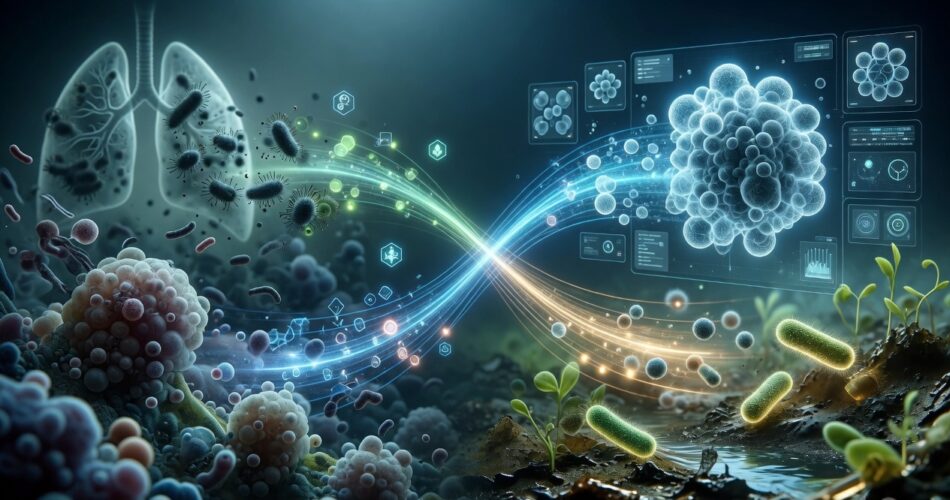
Antibiotic resistance is becoming increasingly common. In layman terms, it simply means that certain microorganisms, or bacteria, develop the ability to become immune to the antibiotics that humans take to treat various diseases in the body.
It is a big problem, and many cases of significant antibiotic resistance were observed during the Covid-19 pandemic, when people in many parts of the world took far more medicines than required, ultimately leading some microorganisms to develop resistance to such medicines.
One such bacterium is Pseudomonas aeruginosa, which exhibits both intrinsic and acquired antibiotic resistance. Its intrinsic resistance involves growing and reshaping its protective layer to spread to new surfaces. It also mutates rapidly and forms biofilms that shield it from drugs and the immune system. It is responsible for serious infections such as pneumonia and chronic infections that prove harder to treat. Pseudomonas aeruginosa contributes to the broader antimicrobial resistance crisis that was directly responsible for 1.27 million deaths in 2019 alone.
The good news is that scientists and engineers at the University of Surrey have developed a novel 3D computational agent-based model that recreates how Pseudomonas aeruginosa forms biofilms.
Think of biofilms as a bustling underwater city built by these bacteria, like a slimy fortress in the lungs or on a wound. This protective structure makes infections extremely difficult to clear. Thankfully, the new 3D model captures how biofilms grow under constant fluid flow and how the bacteria break away to colonize new surfaces. This represents a massive breakthrough, as biofilms have long been incredibly hard to study in real conditions. The creation of such virtual environments marks a significant step forward in understanding how they function. In the future, this could aid the development of safer medical devices, plumbing systems, and other environments where harmful biofilms cannot easily form.
With the help of computers and AI, progress in the field of biology is clearly advancing at a rapid pace. In fact, biology and medicine rank among the fields offering the highest and fastest returns on investment where AI can help improve our lives. The idea that one century’s magic becomes another century’s science has taken one step further. It now seems that one decade’s magic is becoming another decade’s science. The exponential growth in technology will soon extend visibly into all other scientific fields, and eventually into sociological ones as well.
Dealing with diseases and promoting longevity might even help apply a temporary brake on the population collapse crisis affecting many countries around the world. While Pseudomonas aeruginosa can harm the body, new strides in science and technology also allow exploration of its beneficial utilities, such as breaking down pollutants from oil spills and heavy metals, cleaning up contaminated soil and water, and aiding waste treatment. Like many microbes, it is a double-edged sword: harmful inside the body yet useful in other contexts.